
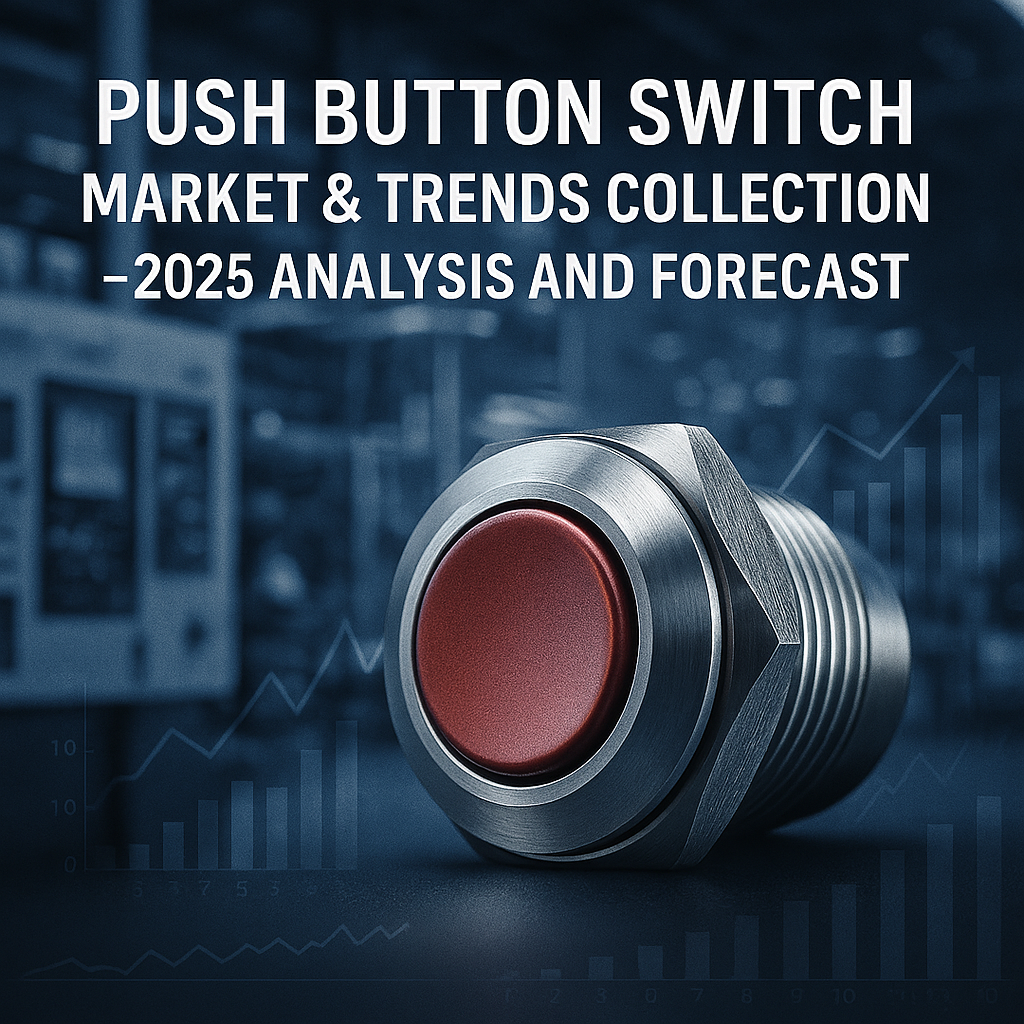
Push Button Switch Material Types & Durability: Industrial Materials Selection & Longevity
In industrial automation, reliability often hinges on small details. The humble push button switch is the interface between people and machines, yet selecting the wrong materials can lead to premature failures, safety hazards or costly downtime. Engineers and OEM buyers need to understand how the material types, mechanical life and environmental resistance of a switch influence its performance. This article examines why material selection matters, how durability is measured and what standards define long‑lasting push buttons for tough applications. Whether you need a metal push button switch, a waterproof control button, or a corrosion‑resistant actuator, you’ll find actionable guidance here.
TL;DR
Material matters: The actuator, housing and contacts each use specific materials—stainless steel, aluminum, high‑grade plastics or silver alloys—to balance strength, conductivity and cost.
Industrial switches last longer: High‑quality push buttons are rated for hundreds of thousands to millions of actuations and feature IP65/IP67 sealing for dust and water resistance.
Mechanical vs. electrical life: Mechanical life often exceeds 500 000 cycles, while electrical life depends on contact materials and load (typically 100 000–500 000 cycles).
Environmental factors: Corrosion, temperature extremes and vibration can shorten switch life; stainless steel housings and high IP ratings help mitigate these risks.
Standards & compliance: Look for switches conforming to IEC 60947‑5‑1/‑5‑5 and UL/CE standards to ensure safety and durability.
Material Types & Structural Components
The anatomy of a push button switch comprises several key parts—the actuator, housing (or shell), electrical contacts and terminals. Each component must be fabricated from a material that meets electrical, mechanical and environmental requirements.
Actuator and Button Cap
The actuator or button cap is what the user presses. Common materials include stainless steel, brass and high‑quality engineering plastics such as polycarbonate or ABS. Stainless steel is chosen for its corrosion resistance and robust feel. Brass offers good machinability and cost‑effectiveness, while high‑grade plastics reduce weight and provide electrical insulation. Smooth operation, wear resistance and a maintained appearance are essential
Housing or Shell
The housing protects the internal mechanism and must withstand mechanical shocks, vibration and environmental exposure. Plastic housings (ABS or polycarbonate) offer electrical insulation and dimensional stability. Metal housings—aluminum, stainless steel or zinc alloy—provide extra strength, heat dissipation and a premium appearance. Aluminum is lightweight and suitable for indoor applications; stainless steel delivers superior corrosion resistance for outdoor, marine or food‑processing environments
| Housing Material | Key Advantages | Limitations | Typical Applications |
|---|---|---|---|
| Plastic (ABS / Polycarbonate) |
• Excellent electrical insulation • Lightweight and cost-effective • Good dimensional stability |
• Lower mechanical strength than metal • Limited heat dissipation • Not ideal for heavy impact areas |
• Control panels • Consumer electronics • Indoor industrial equipment |
| Aluminum |
• Lightweight metal construction • Good mechanical strength • Effective heat dissipation • Premium appearance |
• Lower corrosion resistance than stainless steel • May require surface treatment in harsh environments |
• Industrial machinery • Automation panels • Indoor or semi-outdoor installations |
| Stainless Steel |
• Superior corrosion resistance • High mechanical strength • Hygienic and easy to clean • Long service life |
• Higher cost • Heavier than aluminum or plastic |
• Outdoor equipment • Marine applications • Food & beverage processing • Medical devices |
| Zinc Alloy |
• High rigidity and impact resistance • Good surface finish for decorative designs • Cost-effective alternative to stainless steel |
• Heavier than aluminum • Corrosion resistance depends on coating quality |
• Industrial control panels • Commercial equipment • Applications requiring robust appearance |
| *Housing material selection impacts durability, safety, and environmental resistance of push button switches. | |||
Electrical Contacts
Contacts form the conductive path when the switch is actuated. Silver is widely used because it combines high electrical and thermal conductivity with low resistance. However, silver can tarnish, so contacts may be silver alloy or silver with protective coatings. Gold‑plated contacts offer superior corrosion resistance and stable low‑voltage performance, albeit at higher cost. Palladium provides high wear resistance and is suitable for harsh environments but is more expensive and typically used in specialized applications. The choice of contact material influences electrical life and cost.
Terminals & Mounting
Terminals connect the switch to wiring and are commonly made from brass, phosphor bronze or stainless steel to ensure good conductivity and corrosion resistance. The mounting thread and nut must match the panel thickness; 16 mm, 19 mm and 22 mm are common sizes. A robust mounting design prevents loosening under vibration.
Key Takeaways
The actuator, housing, contacts and terminals each require tailored materials for optimum performance.
Stainless steel and aluminum housings offer corrosion resistance and strength, while plastic housings provide insulation.
Silver, gold and palladium contact materials balance conductivity, corrosion resistance and cost.
Internal link: Learn more about control panel push button wiring for proper integration.
Durability & Mechanical Life
Durability refers to how many actuations a switch can withstand before failure. It comprises mechanical life (the number of times the button can be pressed) and electrical life (how many switching operations it can perform under load).
Mechanical Life Ratings
Industrial push button switches are engineered for long service. Basic consumer switches may only last a few thousand presses, but industrial models are rated in the hundreds of thousands to millions of cycles. For example, many standard metal push button switches offer a mechanical life expectancy of 500 000 to 1 000 000 actuations high‑end models can exceed this range. Some heavy‑duty industrial switches even advertise 3–5 million cycles. These ratings assume proper installation and operation within specified temperature, shock and load limits.
Electrical Life
Mechanical life is only one side of the equation. The electrical life—the number of make‑and‑break operations under electrical load—is typically lower. Metal push buttons may achieve 100 000 to 500 000 electrical cycles, depending on contact material, current and voltage. Gold‑plated or silver alloy contacts reduce arcing and oxidation, extending electrical life. Exceeding the rated current or using the switch to interrupt high‑power circuits can reduce the electrical life dramatically.
Factors Affecting Longevity
Several factors influence longevity:
Materials: Stainless steel housings and high‑strength alloys minimize wear Reinforced plastic actuators with metal inserts provide a good balance of strength and weight.
Environmental conditions: Exposure to moisture, dust, chemicals or extreme temperatures accelerates wear. IP65 and IP67 ratings indicate resistance to dust and water jets; higher ratings (e.g., IP68) indicate submersion capability.
Frequency of use: High‑traffic control panels lead to faster wear. Over‑pressing or using the switch as a lever can damage the mechanism.
Maintenance: Keeping the switch clean, ensuring proper sealing and periodically inspecting for wear can extend its service life
Standards & Lifespan Certification
Look for switches certified to international standards such as IEC 60947‑5‑1 (general requirements for control circuit devices) and IEC 60947‑5‑5 (emergency stop functions). These standards specify mechanical and electrical endurance, IP ratings and safety requirements. UL, CE and CCC marks indicate compliance with regional safety and quality regulations.
Key Takeaways
Mechanical life can exceed 500 000 cycles for metal push buttons; high‑end industrial models offer 3–5 million operations.
Electrical life is typically 100 000–500 000 cycles and depends on contact material and load.
IP ratings, materials and proper maintenance are critical to achieving the rated lifespan.
Internal link: Explore our emergency stop push button wiring guide to understand safety circuits.
Environmental Protection & Corrosion Resistance
Industrial environments expose switches to dust, oil, moisture, chemicals and extreme temperatures. Choosing the right materials and sealing ensures the switch remains functional in such conditions.
IP Ratings: Dust and Water Resistance
Ingress Protection (IP) ratings define a switch’s ability to resist dust and water. IP65 indicates complete dust protection and resistance to water jets; IP67 adds protection against immersion up to one meter. Many industrial switches with IP65/IP67 enclosures are designed for harsh production lines, food processing and outdoor installations. Some also carry IK ratings to indicate impact resistance—important for public kiosks and heavy‑duty equipment.
Corrosion‑Resistant Materials
Corrosion occurs when environmental moisture, salt or chemicals attack the housing or contacts. Stainless steel is the gold standard for corrosion resistance and is suitable for marine, food and chemical environments. Anodized aluminum offers moderate corrosion resistance and can be color‑anodized for design accents. Plastics (ABS or polycarbonate) are immune to rust but may degrade under UV or chemical exposure. Applying protective coatings or selecting specific stainless grades (e.g., 316L for marine environments) further improves corrosion resistance.
Harsh Environment Considerations
Harsh environments include high vibration, shock, temperature extremes and exposure to solvents. In these settings, vandal‑proof or anti‑vandal push buttons with reinforced metal structures are common. They incorporate stainless steel housings, thicker actuators and tamper‑resistant designs. Waterproof sealing using silicone gaskets or O‑rings is essential. Some models are explosion‑proof or ATEX/IECEx rated for hazardous locations.
To ensure long life, select a switch with the highest IP rating required by your application, choose materials appropriate for the chemical exposure, and verify compliance with IEC and regional standards
Key Takeaways
IP65 and IP67 ratings protect switches from dust and water; IK ratings indicate impact resistance.
Stainless steel housings offer superior corrosion resistance; anodized aluminum and high‑grade plastics provide lighter alternatives.
Anti‑vandal designs and ATEX/IECEx certifications are needed for extreme environments.
Internal link: Check our waterproof push button switch construction guide for design tips.
Contact Materials & Electrical Performance
The material used for the electrical contacts of a push button switch determines its conductivity, resistance to wear and oxidation, and suitability for different currents and voltages.
Silver & Silver Alloys
Silver offers the highest electrical and thermal conductivity of all metals used in switches. It provides low contact resistance and cost‑effectiveness. To reduce oxidation, manufacturers often use silver alloys or apply a protective coating. Silver contacts handle moderate to high currents but may tarnish in corrosive atmospheres. In low‑voltage applications, silver can provide over 100 000 electrical cycles when properly protected.
Gold Plating
Gold‑plated contacts excel in low‑voltage, low‑current circuits. Gold is highly resistant to corrosion and maintains low contact resistance. However, gold’s mechanical and thermal properties limit its use in high‑current applications. Gold plating is often applied over nickel or silver to reduce cost while still providing a non‑oxidizing surface.
Palladium & Other Alloys
Palladium and palladium‑based alloys offer excellent wear resistance and low friction. They are used in harsh environments or applications requiring many cycles. Palladium contacts are more expensive and less common. Copper, tin and tungsten alloys are sometimes used for specific voltage and current requirements; for example, tungsten is suitable for high‑voltage circuits where arc resistance is crucial.
Matching Contact Material to Application
Selecting the right contact material involves balancing current, voltage, environmental conditions and budget. Low‑voltage control circuits in PLCs benefit from gold‑plated contacts, while high‑current motor starters may require silver or tungsten alloy. For harsh chemical environments, palladium or gold plating ensures long‑term reliability. Always check the datasheet for contact ratings and ensure the switch meets relevant standards such as IEC 60947‑5‑1
| Contact Material | Electrical Conductivity | Corrosion Resistance | Typical Applications |
|---|---|---|---|
| Silver (Ag / Ag Alloy) |
• Very high conductivity • Suitable for medium to high current |
• Moderate corrosion resistance • May oxidize in polluted environments |
• Motor starters • Power control circuits • Industrial machinery |
| Gold (Au / Gold-Plated) |
• Excellent low-voltage signal conductivity • Stable contact resistance |
• Excellent corrosion resistance • No oxidation |
• PLC control circuits • Signal-level switching • Medical & precision electronics |
| Palladium (Pd / Pd Alloy) |
• Good conductivity • Suitable for low to medium current |
• Very high resistance to corrosion and chemicals • Performs well in harsh environments |
• Chemical processing equipment • Outdoor industrial controls • Long-life control switches |
| Tungsten (W) |
• Lower conductivity than silver or gold • Designed for high inrush current |
• Excellent arc and wear resistance • Good high-temperature stability |
• High-current motor control • Heavy-duty industrial switching • Applications with frequent arcing |
| *Always verify contact ratings and compliance with standards such as IEC 60947-5-1 before selection. | |||
Key Takeaways
Evaluate total cost of ownership—durable switches may lower maintenance costs over time.
Custom OEM designs from Material Push buttom Switch CDGKZ allow you to optimize materials and features for specific applications.
Compliance with RoHS and other environmental regulations is essential.
Internal link: Discover OEM push button switch customisation services for tailor‑made solutions.
Conclusion & Call to Action
Selecting the right push button switch is more than choosing a color or shape—material types, mechanical and electrical life and environmental protection determine whether the switch will perform reliably for years. Industrial switches built with stainless steel housings, silver or gold contacts and IP67 sealing can withstand millions of cycles and harsh conditions. By understanding material properties and durability ratings, you can make informed decisions that reduce downtime and increase safety.
At Material Push buttom Switch CDGKZ, we specialize in designing and manufacturing custom push buttons tailored to demanding applications. Whether you need a corrosion‑resistant momentary switch for a marine vessel, a vandal‑proof emergency stop for public kiosks or a low‑profile PCB‑mount button for medical equipment, our engineers can deliver. Contact us today to discuss your project and discover how the right materials and design can extend the life of your control system.
